
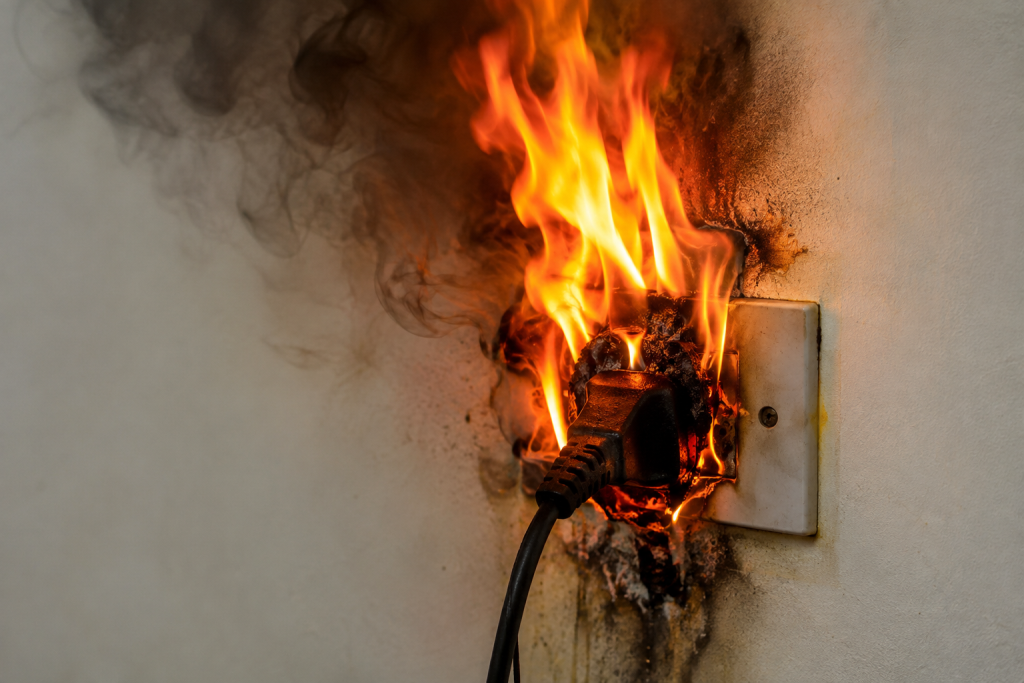
Many homes/businesses unknowingly increase their fire risk through simple mistakes:
- Ignoring faulty electrical wiring
Ignoring faulty electrical wiring can have a serious impact on fire safety because electrical faults are a common source of ignition. A small wiring problem can develop into overheating, arcing, equipment damage, or an electrical fire.
A small electrical fault today can become a serious fire tomorrow.
- Blocking emergency exits
Blocking emergency exits can have a serious impact on fire safety because it can prevent people from escaping quickly when a fire occurs. People may have to move obstacles or waste time finding another route before they can escape, exposing them to smoke and other effects of fire. Firefighters and other emergency personnel need clear access to buildings and escape routes.
Emergency exits must be kept clear, accessible, visible, and usable at all times.
- Lack of fire extinguishers
Lack of suitable and properly maintained fire extinguishers can significantly reduce fire safety, particularly during the early stages of a fire when prompt action may prevent a small incident from becoming a major fire. A fire that could potentially have been contained may spread to equipment, furniture, stock, buildings, and other property.
The right fire extinguisher, available at the right place and time, can help control a fire before it becomes a major emergency.
- Overloading power systems
Overloading electrical power systems can significantly increase fire risk because electrical circuits, cables, sockets, and protective devices may be subjected to currents beyond their intended capacity. When too much current flows through a cable or circuit, the conductors can become excessively hot. Excessive heat can cause cable insulation to deteriorate, melt, or become brittle. Damaged insulation can also lead to short circuits and electrical arcing which can ignite nearby combustible materials.
Don’t overload your electrical system – excess current can become excess heat, and excess heat can become fire.
- Storing flammable materials carelessly
Careless storage of flammable materials can significantly increase fire risk because it can make ignition more likely, allowing a fire to spread rapidly, and make firefighting and evacuation more difficult.
Good storage limits the fuel available to a fire and prevents ignition sources from coming into contact with that fuel.
- No fire alarm system
A building without a fire alarm system may delay the detection and warning of a fire. The earlier a fire is detected, the quicker people will have to evacuate, and emergency respondents have to act. Without automatic detection, a fire may remain unnoticed until someone sees smoke, flames, or smells something burning. This is especially dangerous when a fire starts at night or in an unoccupied area.
Early detection → early warning → faster evacuation → earlier intervention → reduced consequences.
- Skipping inspections
Skipping fire-safety inspections can significantly increase risk because defects and hazards may remain hidden until a fire occurs. Faulty wiring, blocked exits, damaged equipment, and improper storage may not be noticed. Fire extinguishers, alarms, emergency lighting, fire doors, sprinkler systems, and other equipment require inspection and maintenance. Regular inspections help identify problems early, before they become emergencies.
What isn’t inspected may not be working when you need it most.”
- No emergency plan
Having no emergency plan can seriously weaken fire safety because people may not know what to do, where to go, or who is responsible for what when a fire occurs. In an emergency, confusion and delay can increase the risk of injury, loss of life, and property damage. A lack of preparation can cause people to react unpredictably. Children, elderly people, persons with disabilities, visitors, and anyone unfamiliar with the building may require additional assistance during evacuation. A clear emergency plan establishes when to evacuate and when firefighting should be left to trained personnel.
In a fire emergency, preparation saves time – and time can save lives.
- Assuming insurance is enough
Assuming insurance is enough to protect against fire can create a dangerous false sense of security. Insurance may help with certain financial losses after a fire, but it does not prevent the fire, protect people during the emergency, or replace effective fire-safety measures.
Insurance may help you recover from a fire, but it cannot prevent the fire or save a life.
10 Poor staff training
Poor staff training can significantly weaken fire safety because employees may not know how to prevent fires, raise the alarm, evacuate, or respond appropriately when a fire emergency occurs.
Fire safety equipment is only effective when people know how and when to use it.
In Ghana, these issues are common in offices, shops, and warehouses.
Fire safety requires proactive management – not assumptions.
Conduct a quick fire safety audit of your business today.