
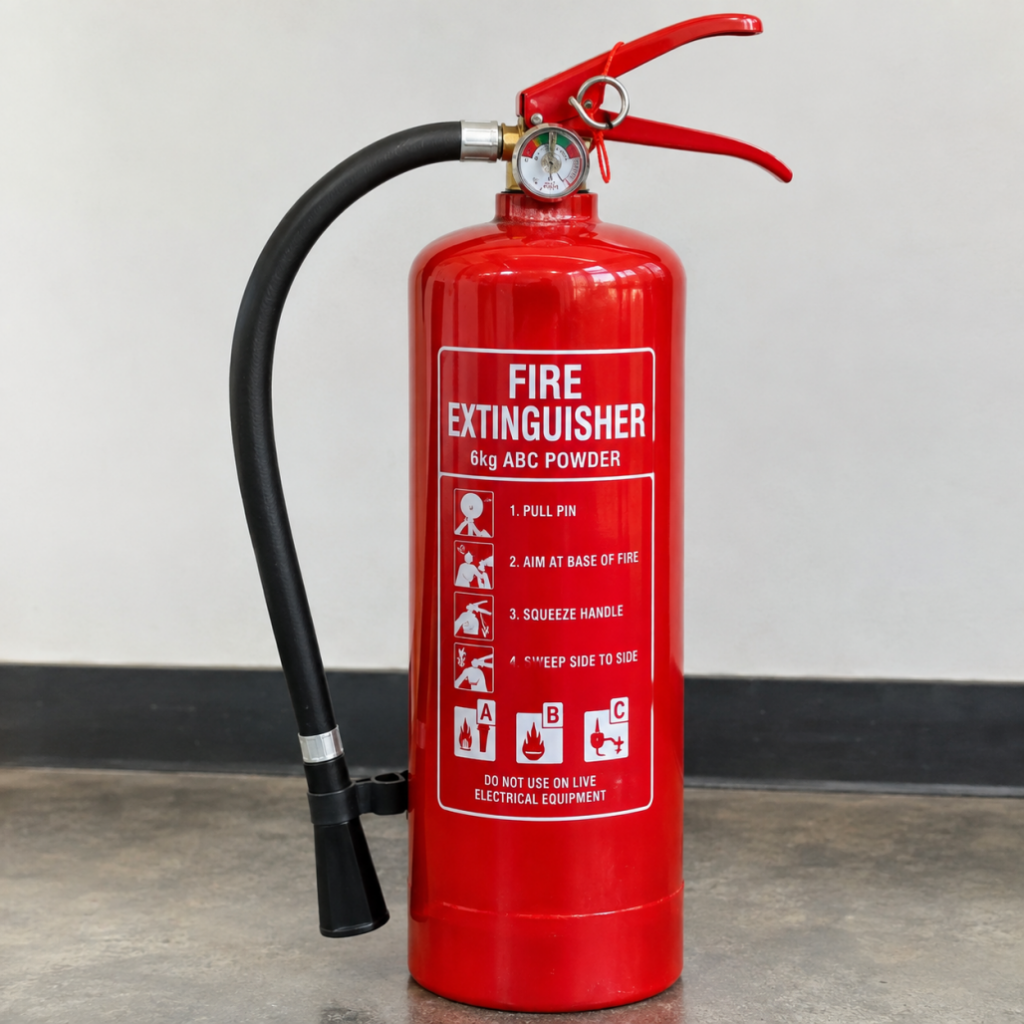
Not all fires are the same and using the wrong extinguisher can make a situation worse.
Fire classes include:
Main principles
Cooling — remove heat
- The most common method is applying water.
- Water absorbs a large amount of heat, lowering the fuel below its ignition temperature.
- This is why water is generally highly effective against Class A fires.
Smothering – reduce oxygen
- Covering or enclosing the burning material can restrict its supply of oxygen.
- Examples include using a fire blanket for a small, appropriate fire or applying a suitable extinguishing agent that forms a covering layer.
Starvation — remove the fuel
- Remove unburned combustible material from the fire’s path where this can be done safely.
- For example, moving combustible materials away from a small fire can prevent it from spreading.
Interrupt the combustion process
- Some extinguishing agents chemically interfere with the combustion reaction.
- Certain dry-chemical extinguishers can do this, although the appropriate extinguisher depends on the particular fire and environment.
Each of the above classes requires a specific type of extinguisher. For example, water extinguishers are suitable for Class A fires but are dangerous for electrical fires.
For homes and businesses in Ghana, having a multi-purpose (ABC) extinguisher is often recommended.
Check your extinguisher type today, you might be using the wrong one.